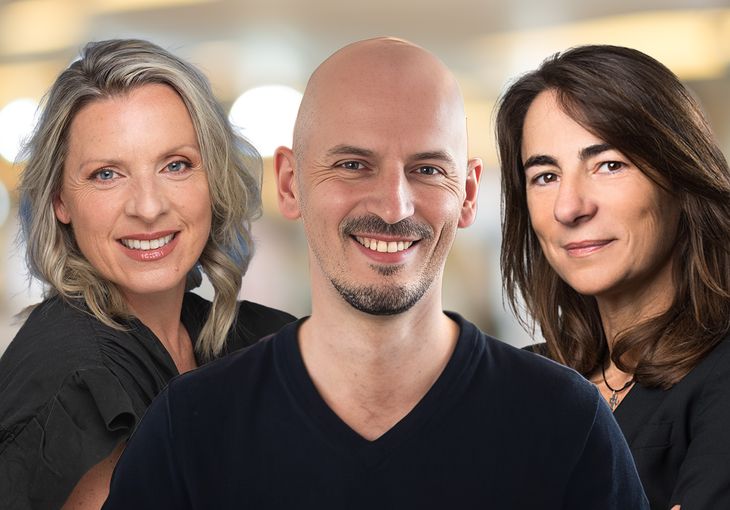
Séverine Amate, founder of Amate Réseaunance, a media PR agency and former head of press relations at the SeLoger Group, Isabelle Larochette, President and Founder of De La Cour Au Jardin, and Benoît Galy, CEO of Green-Acres, share their perspective and analysis of the second home and family home market — drawing on figures from the latest Green-Acres Observatory published on 20 March 2026, alongside insights from the field.
Séverine, can you tell us in what capacity you're speaking on this subject?
Séverine Amate: I have been running my own PR agency for three years, working primarily with players in the housing, real estate and proptech sectors. Before that, I was head of press and public relations at the SeLoger Group. I have initiated many market studies on real estate and numerous opinion surveys across all segments of the housing market — new builds, existing properties, construction, commercial real estate and the premium segment. I am used to connecting market research findings with underlying psychological behaviours. I advise real estate industry players on their media presence, and I continue to comment on and analyse the market in the press and on television.
How do you read the family home market today?
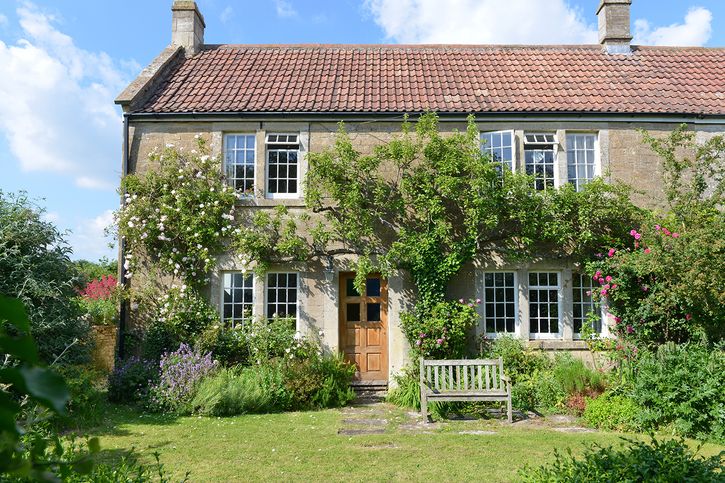
Séverine Amate: The family home is no longer just a holiday house. Today, it is often the first step in a life change. France has around 3.7 million second homes — nearly one in ten dwellings. What is changing today is how they are used. According to the latest edition of the Green-Acres Observatory, 74% of buyers intend, at some point, to make their second home their primary residence. In other words, the second home is increasingly becoming a deferred primary residence. And demand on the Green-Acres platform is up 8.6% year-on-year — this is not a short-term trend, but a structural shift.
Do you see this on the ground, Isabelle?
Isabelle Larochette: Absolutely. I have been observing this market for over 30 years, and this return to the family home is very clear. What people want today is a house with real bedrooms for their children and grandchildren, outdoor space, room to breathe. There is a very strong emotional dimension to it. This is no longer the slightly dated second home of the 1980s — it is a life project, often conceived around retirement or a major life transition. And this project has come back with force since Covid. We sold a great many family homes during that period, and the momentum has not stopped. Another important factor is demographics: a growing number of baby boomers who have both the means and the desire to invest in this type of property. This is no longer a niche — it is a structural trend.
Who are these buyers, and what exactly are they looking for?
Séverine Amate: They are mostly urban dwellers in transition — often semi-retired or on the verge of a life change. Paris alone accounts for 28% of searches on Green-Acres. The type of property they are looking for? A house of around 135 sq m, with a median budget of €283,000. That is a measured budget — we are talking about a range of €1,600 to €2,000 per square metre, compared to nearly €10,000 in Paris. What this tells us is that they have accepted that property elsewhere does not come at capital-city prices. And when the budget drops below €200,000, the logic shifts again: for buyers from the Paris region, this is not a compromise — it is a geographic compass. With that budget, they are typically looking for a house of around 100 sq m with more than 1,300 sq m of land. The priority becomes space and quality of life rather than a premium location.
Where do they actually go?
Séverine Amate: Two clear destinations emerge from the study. The first is a sun-drenched pied-à-terre: Perpignan, Nîmes, Narbonne, Cannes — cities favoured in searches, with apartments priced between €80,000 and €150,000, appealing for their climate. The second, and more dominant, is the countryside retreat. Towns such as Civray in the Vienne, Gourdon in the Lot, or Luzy in the Nièvre now offer the opportunity to buy homes of over 130 sq m with more than 1,000 sq m of land at manageable prices.
Which regions are the most attractive right now?
Séverine Amate: The Dordogne, where a 100 sq m house on a 1,800 sq m plot can be found for around €149,000. The Nièvre, accessible for a minimum of 100 sq m within a budget of €115,000. The Charente at €103,000, and the Creuse and Corrèze both below €120,000. These areas often offer the chance to buy for under €1,000 per square metre. For the same budget, you go from a studio by the sea to a large country house with a garden.
Do we have data on transactions above €200,000?
Benoît Galy: Across all our users — French and international — the overall median price is €285,000. But the breakdown is as follows: 25% of buyers purchase a property for under €160,000, and at the other end of the scale, 25% buy above €490,000. The top 10% most active in the premium segment are above €860,000.
What are the main geographic segments of the market, and how do buyers choose between them?
Séverine Amate: The Green-Acres Observatory identifies three broad search territories for second homes.
The coast is where buyers are purchasing a location: a median price of €416,000 for 94 sq m, with more than half of properties being apartments. Prestigious addresses such as La Baule at €768,920 or Le Touquet at €755,000, but also accessible markets like Le Barcarès at €139,000 or Gruissan at €190,000.
The mountains: the Alps, accessible at a median budget of €484,000 for 94 sq m, alongside more affordable mountain ranges such as the Pyrenees at €165,000 or the Massif Central at €150,000. For the price of an apartment in the Alps, you could buy a large family home in Auvergne.
The countryside is where the family home project comes into its own. In the West, the median price is €199,000 for houses of over 130 sq m with generous plots. In the South-West, it approaches €245,000. The South-East plays in a different league altogether — in Mougins, nothing is conceivable below €1,400,000; in Saint-Rémy-de-Provence, the budget is nearly halved (€850,000), yet remains three times higher than the national median for a second home purchase. This is the segment of the exceptional.
What constraints should buyers anticipate before purchasing?
Benoît Galy: Two factors have become just as structurally important as the price per square metre. First, taxation: the taxe d'habitation on second homes has changed dramatically. The national average stands at €1,125 per year, but that figure is highly misleading. In Paris, the average cost exceeds €2,783 — with a surcharge capped at 60%. Nice, Bordeaux, Biarritz: the same picture. Cannes, La Baule and Le Touquet, by contrast, have not applied this surcharge. It is a political choice that varies from one municipality to another.
Séverine Amate: Short-term rental is the other variable that absolutely must be factored in. According to the Green-Acres Observatory, 53% of buyers intend to rent out their property. But today, more than 700,000 second homes — 20% of the total stock — are located in areas subject to significant restrictions. The Observatory has mapped these constraints across five levels, from a simple mandatory registration requirement through to the most restrictive regime, involving compensation schemes, quotas and a 90-day cap. The Basque Country perfectly illustrates the impact: following the introduction of the compensation scheme, short-term rental authorisations fell by 92% in a single year. From May 2026, levels 1 and 2 will be extended across the entire European Union. Choosing where to buy now also means choosing your regulatory environment.
Are there still areas offering accessible prices, moderate taxation and rental freedom?
Benoît Galy: Yes, and this is what we call the freedom zone. Three territories stand out in 2026. First, the accessible Pyrenees: Cauterets at €129,000, Saint-Lary-Soulan at €179,000 — dynamic ski resorts with growing summer seasons and rental regulations that remain largely at level 1 or 2. Then the Massif Central: a median price of €150,000, 97% houses, properties frequently exceeding 130 sq m, and some of the most moderate local taxation in France. And finally, deepest western France: Vierzon at €103,500, Vire Normandie at €169,000 — markets where the dream of a house with a garden is once again financially within reach, with virtually no rental restrictions.
These three territories share one essential characteristic: they still offer what the iconic markets have gradually lost — the freedom to do with your property whatever you wish.
So, is now really the right time to buy?
Séverine Amate: The honest answer is that for twenty years people have been saying it is never "the right time" — and yet prices have risen by 30% over the past twenty-five years. Today, the market is becoming readable again: interest rates have stabilised, property remains a safe-haven asset. We closed 2025 with 875,000 transactions — a perfectly respectable year. Caution exists, but the market never stops.
Isabelle Larochette: Since 1998, I have been asked this question countless times, and my answer remains the same: yes, it is always the right time to buy. Real estate is first and foremost a form of forced saving, but it is also a life project lived with emotion and pleasure. On a primary residence, very few buyers fail to make a capital gain, provided they hold the property for at least five years. And even with slightly higher interest rates, you can always renegotiate. In a difficult geopolitical environment, property remains a safe-haven asset — when the stock market falls, it is often the moment to secure tangible wealth.
Benoît Galy: I will say it plainly: investing in a second home is not necessarily a sound financial investment. But we only live once. The real question is: do you want to treat yourself? Do you want a particular place, somewhere that restores you? At Green-Acres, we position ourselves as the platform for pleasurable property buying. And demographics are working in our favour: a growing number of active seniors, baby boomers who have both the means and the desire. This is not a passing trend — it is a wave. Finding a second home for under €100,000 is entirely possible.
The question we ask all our guests — how would you define the art of living?
Benoît Galy: For me, it is finding places where you can recharge, flourish and live authentically. And to take pleasure in doing so.
Séverine Amate: Authenticity, good living, family gatherings, the art of welcoming others… And above all, the art of not letting life's meaningful moments pass you by. That, to me, is the art of living.