When real estate commits to better housing: a meeting with Isabelle Larochette
When real estate commits to better housing: a meeting with Isabelle Larochette
In 2013,Isabelle Larochette, president and founder of De La Cour Au Jardin, created I Loge You, a foundation that brings together real estate professionals around the issue of housing.While today the housing crisis remains a major concern for the French, Isabelle has made it one of her causes since 2007, following the call by Augustin Legrand and Les Enfants de Don Quichotte.
Isabelle, what has your journey been like?
Isabelle Larochette: I grew up in the Berry region and then moved around a lot. I’m self-taught. After finishing high school, I needed freedom, so I traveled around France. I got involved with associations and did lots of small jobs. I worked in fashion retail, catering… I even organized a fashion show in Bourges!
How did you get into real estate?
I.L.: I got into real estate somewhat by chance. A property developer in Bourges gave me my first opportunity. At the beginning, I didn’t really understand what the job involved, but I quickly made my first sale—and I was hooked. I felt like I had found my path. Then I received an offer from a major notary office and became a notary clerk. I had two conditions: to complete formal training and to assist each partner notary with their different files (sales, inheritance, donations, etc.). I gained deep experience in all legal aspects. I loved it, and it became the foundation of the rest of my career.
Why didn’t you stay in notarial work?
I.L.: Because I’m curious! I stayed with that notary office for a few years, but I wanted to understand another side of real estate, so I joined a bank in Paris where I sold and promoted bridge loans to real estate professionals. That experience taught me a lot, and I was later headhunted by a real estate network to lead one of their agencies.
And how was De La Cour Au Jardin born?
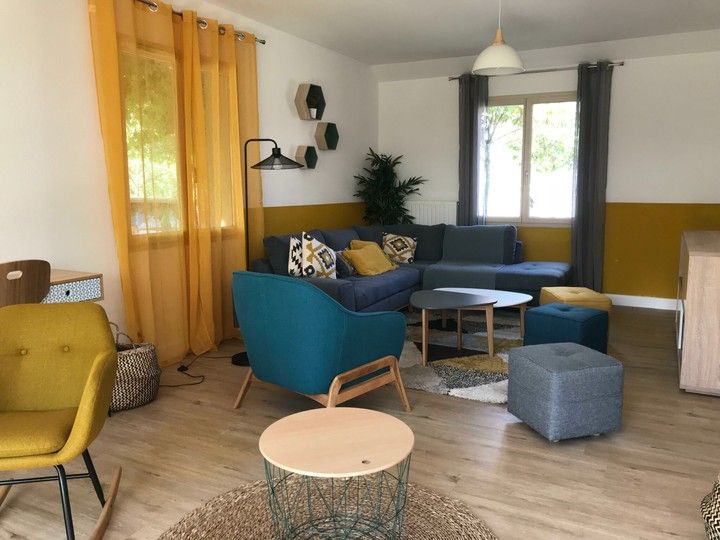
I.L.: As always, it started with a meeting... I met my first partner, and we opened our first agency in Batignolles in 1998, then a second in Montmartre. Beyond the specific properties we sold, when you walked into those agencies, it felt like entering a home. We created very cozy spaces with fireplaces and rugs. Most importantly, we welcomed clients around a round table. There was no desk acting as a barrier between us and the client. This atmosphere encouraged conversation. We wanted people to feel at home.
Today, De La Cour Au Jardin is a 100% digital agency. When did you make that transition?
I.L.: In 2015, when the internet truly overtook physical agencies. Clients stopped visiting the office and instead contacted us after seeing our listings online. I realized the profession was changing, and I decided to ride the wave. That’s how the De La Cour Au Jardin network was born.
At the same time, you got involved very early in the fight against poor housing. You even managed to rally part of the real estate profession to join you in this cause… How did this commitment begin?
I.L.: Back in 2007, I was living on the Quai de Jemmapes and witnessed the protest organized by Augustin Legrand and the association Les Enfants de Don Quichotte. He had launched a national appeal to denounce the treatment of homeless people. Hundreds of homeless individuals had pitched their tents along the quay, right outside my home. So I went down to speak with them… and it was a wake-up call.
That’s when you created the Agence Solidarité Logement (ASL)…
I.L.: Yes, I told myself that as real estate professionals, we had a role to play—and a responsibility. I gathered a few friends and we founded the Agence Solidarité Logement. The idea was to donate 1% of our revenue to support those living in poor housing conditions. We launched an appeal in Le Parisien to the real estate profession, and 80 agencies joined us.
What did you do with the funds collected?
I.L.: We donated them to associations or foundations that were actively working on the ground to combat inadequate housing. Then, one day, I was contacted by the Fondation de France, which presented a particular situation. They sometimes receive real estate as inheritance, but they can’t sell it directly. They asked us to handle these sales through the ASL network.
In 2013, you decided to go further and created the I Loge You Foundation under the aegis of the Fondation de France… How does it operate?
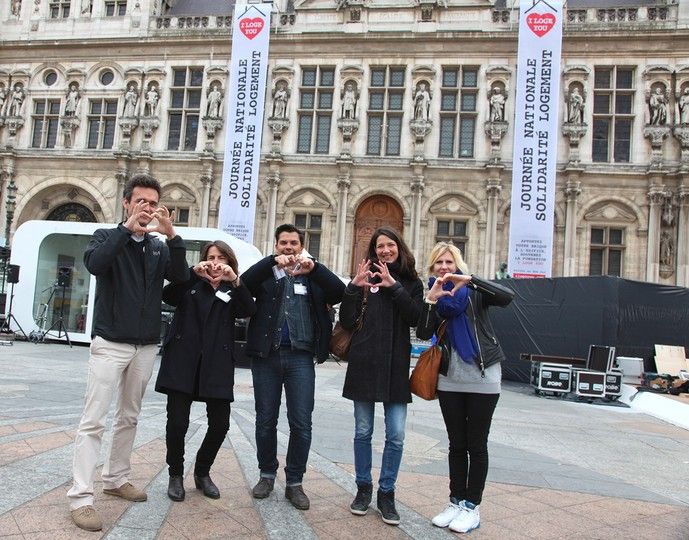
I.L.: The I Loge You Foundation works to improve housing conditions. Each year, we choose a project to support and fund. Since our creation, we’ve helped renovate a Village d’Enfants for Action Enfance in Montargis; we renovated a shelter for women victims of violence in central Paris; and we supported the creation of a nonprofit nursing home in a former school near Sancoins… In short, initiatives that serve everyone, regardless of age or background.
A memorable moment you’d like to share?
I.L.: The most emotional memory was when we renovated that Action Enfance pavilion. We had all the furniture delivered and contacted a toy distributor and a publishing house. Seeing the joy on those children’s faces—like it was Christmas—was deeply moving.
How do you manage to rally the real estate sector behind your cause?
I.L.: Let’s be honest—it’s very difficult to secure funding. You have to follow up constantly, negotiate, talk things through. Today, we have a recognized place in the field, but at the start, I was rejected quite a bit. I’m not the type to give up easily, so I came back through the window, so to speak… But when you hand over the check to the association, you know the fight was worth it.
What is I Loge You working on this year?
I.L.: This year, we want to address the student housing crisis. There are 3 million students in France, and 250,000 of them live in extremely poor conditions. Half of all students live on just €3 per day, and alarmingly, 17% have dropped out of their studies due to lack of financial resources. Can you imagine? So, with UNPI and FNAIM, we’ve launched a campaign to encourage homeowners with a vacant room to host a student.
There’s growing skepticism around spontaneous initiatives like this from companies. How do you respond to accusations of “social washing”?
I.L.: I’m very sensitive to that. Honestly, at first, I refused to talk about it on behalf of De La Cour Au Jardin. I didn’t want to be accused of using it to promote the company. We do this for others, not for business. If you look at our site and our social media, we’ve never mentioned that we founded I Loge You. If I speak openly about it now—even though the foundation is 11 years old—it’s because the situation is urgent. The housing crisis is worse than ever.
Finally, Isabelle, you won’t escape it—you’ll be treated like all our other guests and must answer our favorite question: what is your definition of the art of living?
I.L.: Spontaneously, I’d say it’s the art of bringing people together. For me, it’s about conviviality, the art of hosting, and the simplicity of shared moments.